Black don’t crack.
It’s a common phase to describe the timeless appearance of Black women. You would hear at the family reunion, First Sundays at church and grandma’s house. But more often than less, some cracks cut through. What happens when the gray hairs become more noticeable and the wrinkles more visible? The answer should be nothing, either you’re growing old or you’re six feet under.
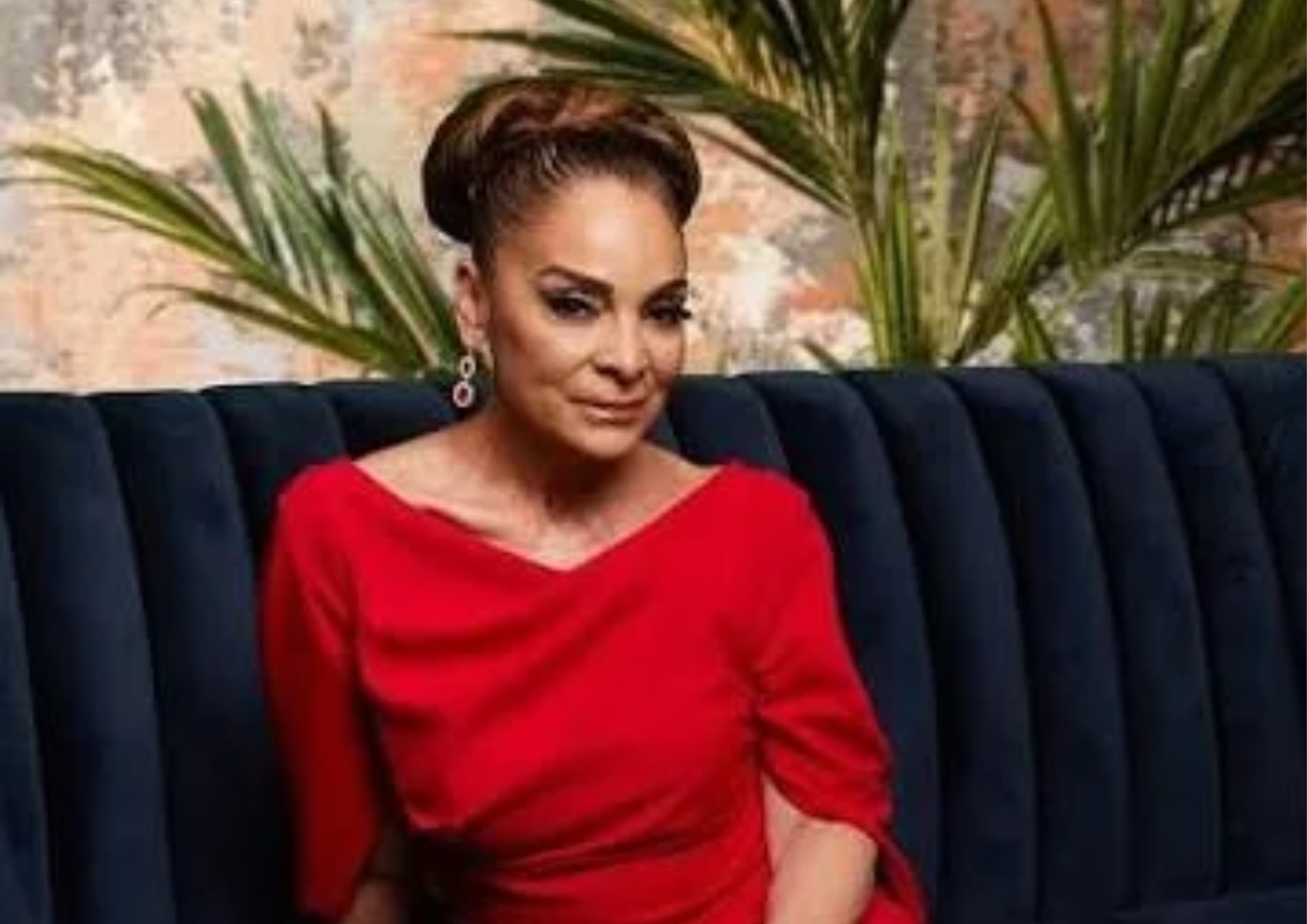
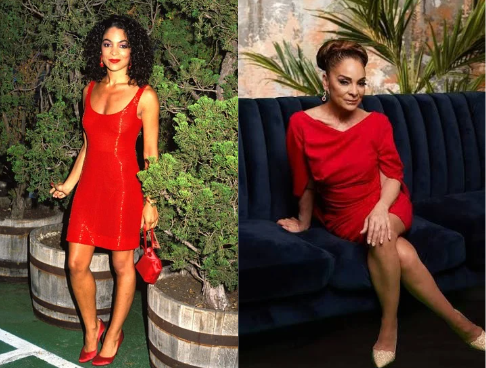
However, scrutiny about Black women aging has been in the headlines, most recently towards actress Jasmine Guy.
Guy, best known for her portrayal as Whitley Gilbert on A Different World, returned to the series for its reboot, now playing on Netflix. She immediately became the subject of online commentary about her appearance.
For many Black women growing up in the 90s, Guy was a beauty and cultural icon. But conversation surrounding her has shifted from celebrating her legacy to scrutinizing the natural changes in her appearance.
Quin Brewington, 56, a communications strategist and founder of SisterLadyGirl Consulting, says the criticism is a reminder of how little grace society sometimes extends to women as they grow older.
“With Jasmine Guy, people remember a character they loved and a woman they watched in her 20s,” says Brewington. “But loving that version of her shouldn’t mean she has to keep looking that way forever. She’s lived a whole life since then. Why wouldn’t that show?”
Rev. Sonia Russell, the CEO and co-founder of BlackFULLness , a mindfulness and mental wellness platform, says when she reads about the criticism towards Guy, it sends a negative message.
“It suggests that no matter what we’ve [Black women] accomplished, how much we’ve contributed, or how fully we’ve lived, our appearance can still be used to diminish our worth,” says Russell. “And frankly, I’m tired of Black women being expected to carry burdens that were never meant to be ours and certainly don’t have our well-being in mind.
Nonetheless, Guy is just one of many Black women who fall into the silent pressure to upkeep a version of themselves that no longer exists.
When a Compliment Becomes an Expectation
For generations, phrases such as “Black don’t crack” and “Fine like wine” have been used to celebrate Black beauty and the appearance of youthfulness. But beneath those compliments lies a more complicated question: What happens when a Black woman no longer meets those expectations?
Growing up in the Bay, dual-licensed cosmetologist and esthetician, Hadiyah Daché, also known as the ‘Fairy Glow Mother’, has heard it all, from Black to brown women. “ I usually heard it as ‘Black don’t crack, Asian don’t raisin, and Brown don’t frown,’ ” says Daché. “To me, it’s more of a cross-cultural nod to how good and well-kept we look as we age, especially compared with the short shelf life of the idealized white beauty standard.”
A 2024 poll by the National Women’s Law Center suggests that socioeconomic factors, which includes appearance, as well as racial and gender discrimination, contribute to the stress-related conditions in Black women.
While often rooted in admiration, those expressions can reinforce the idea that maintaining a youthful appearance is something women should strive to achieve indefinitely. But licensed therapist and owner of Mindful Blooms Counseling Adebisi Gbadamosi tells RoyalTee, such phrases can give Black women a false perception of beauty and aging; and if not addressed it could lead to depression and isolation.
“Black women are often expected to carry the weight of the world without breaking a sweat, even when it’s unrealistic,” says Gbadamosi. “Aging can seem like a physical representation of us not being able to measure up. It can leave you feeling like a failure, which leads to lower self-esteem, increased self-doubt, and feelings of perfectionism.
Brewington says her own understanding of the familiar phrase has changed with age. What she once accepted as a compliment now carries a different meaning.
“What happens when we do crack,” questioned Brewington. “When our faces change, our bodies change, and we actually look like we’ve lived?”
For Russell, the expectation to remain youthful is just another thing that Black women are expected to be exceptional at. “We can’t just age. We have to age beautifully, gracefully, effortlessly, and apparently without looking like we’ve aged at all,” says Russell. “It’s not unlike the expectation that Black women must always be strong. What starts as a celebration of something wonderful about us can become another burden we’re expected to carry.”
Mental and emotional toll
When expectations surrounding beauty and youth are added to those pressures, aging can become more than a physical transition; it becomes an emotional struggle.
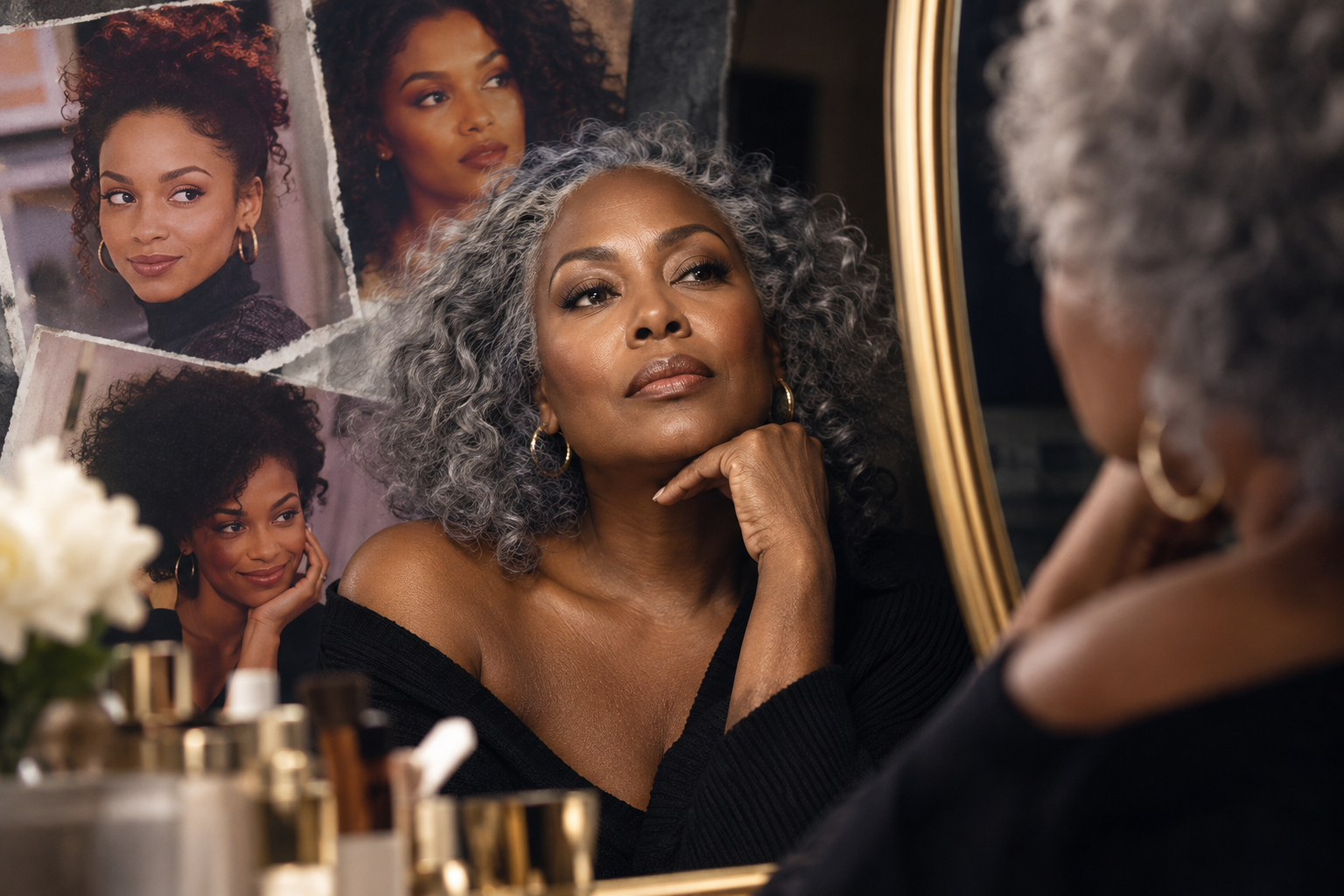
Stress on appearances can appear in our day-to-day life. It starts with the woman in the mirror. If you find yourself standing in the mirror a bit too long, Gbadamosi says one of the first signs to look for is changes in your everyday activities.
Gbadamosi says to ask yourself, “Are you starting to go out less because you’re afraid of being judged? Are you avoiding clothes or hairstyles you love because you don’t want to draw attention to yourself? Are your thoughts consumed with what-if scenarios and finding ways to reverse what’s happening?”
Those feelings can also influence how women speak to themselves.
Gbadamosi noted, “The occasional frustration or slick comment towards yourself isn’t harmful. But when you find yourself changing parts of your life, it needs to be addressed.”
For some women, the concern is not necessarily about getting older, but about what getting older represents in a society that often associates beauty with youth. Daché sees those concerns firsthand through her work with women across different age groups. She says conversations about aging tend to evolve in stages. Initially, clients may express concerns about gray hair. Later, their attention turns to dark circles and fine lines around the eyes. Eventually, wrinkles and age spots become part of the discussion.
“I noticed that once clients reach their mid-late 30s, they ask what they can do to avoid aging in a way that dates them,” says Daché. “They prefer to look timeless.”
Those concerns may also be shaped by what women witnessed growing up. “Or maybe they have seen their mothers, aunts, grandmothers complain about how elements of their aging process affected their beauty,” added Daché. “And now the daughter, niece, granddaughter is looking to prevent the same fate.” Nonetheless, Daché pointed out these conversations are minor compared to her non-Black clients about aging.
Still, the generational influence raises another question: How much of what Black women believe about aging comes from their own experiences, and how much has been inherited from the women who came before them?
“I think Black women live at this ever-evolving, complex intersection of genuinely wanting to feel beautiful and confident, while navigating generations of unrealistic beauty standards that have perpetuated self-hatred, the constant appropriation of our image and likeness, and the ongoing criticism that who we are and how we show up is somehow never enough,” says Russell.
Social media pressure
Social media can also take a toll on how women see themselves, specifically Black women. In a study completed by the National Library of Medicine, nearly 80% Black women who were surveyed expressed a desire to change their hair texture, skin complexion or facial features or experienced discrimination from it, as a result of social media.
Additionally a 2025 study from the North Carolina A&T psychology department showed that Black women were more likely to search for beauty content (i.e. nails, hair, make-up, body types) than health content.
While these conversations extend beyond aging, they point to the broader environment in which Black women are encouraged to evaluate, maintain and sometimes alter their appearance.And when a familiar face like Guy returns to the spotlight decades after becoming a cultural icon, the public response can reinforce those pressures.
Instead of celebrating longevity, talent and the privilege of growing older, the conversation can become centered on whether a woman still looks the way people remember her.
“There is an extraordinary amount of pressure placed on Black women to be strong, beautiful, capable, youthful, and seemingly unaffected by the very real stresses of our lives,” says Russell. “And what concerns me is that we rarely stop to ask what carrying all of these expectations is doing to our well-being. We’re so busy being told how we should look that we’re not paying nearly enough attention to how we actually feel.”
Being allowed to unapologetically age
As beauty standards continue to evolve, experts agree there are two things that should remain constant: acceptance and grace.
There is nothing wrong with wanting to look good, investing in skincare or embracing beauty routines. The question is whether those choices come from a place of personal enjoyment or the fear of no longer being considered beautiful.
Daché encourages women to recognize that their beauty routines, just like their bodies, may need to change with time.
“Whatever you did in your twenties isn’t meant to last your lifetime,” says Daché. Check in with yourself periodically and upgrade your beauty routines where necessary. And remember: Black women set beauty trends, we don’t need to follow them.”
For Russell, the conversation should begin with something much simpler: gratitude. Because there’s only one other option than getting old. “The alternative to growing older is not being here,” she says. “So maybe we begin with gratitude that we’re alive, that we’re still drawing breath, that our bodies have carried us through every single day of our lives.”
Russell added, “And perhaps we can begin to see those wrinkles not as evidence of something lost, but as signs of a life lived. A life that has included joy, grief, laughter, heartbreak, resilience, and hopefully a whole lot of love.”