WARNING: slight spoiler alert
I had the opportunity to attend a pre-screening of the Michael movie before its premiere on April 24th.
Outside of movies such as Toy Story 3 and The Lion King live action (yes I am a huge Disney adult fan), I have never been more excited to pay for an overpriced popcorn and put my germaphobe aside and sit in an auditorium seat.
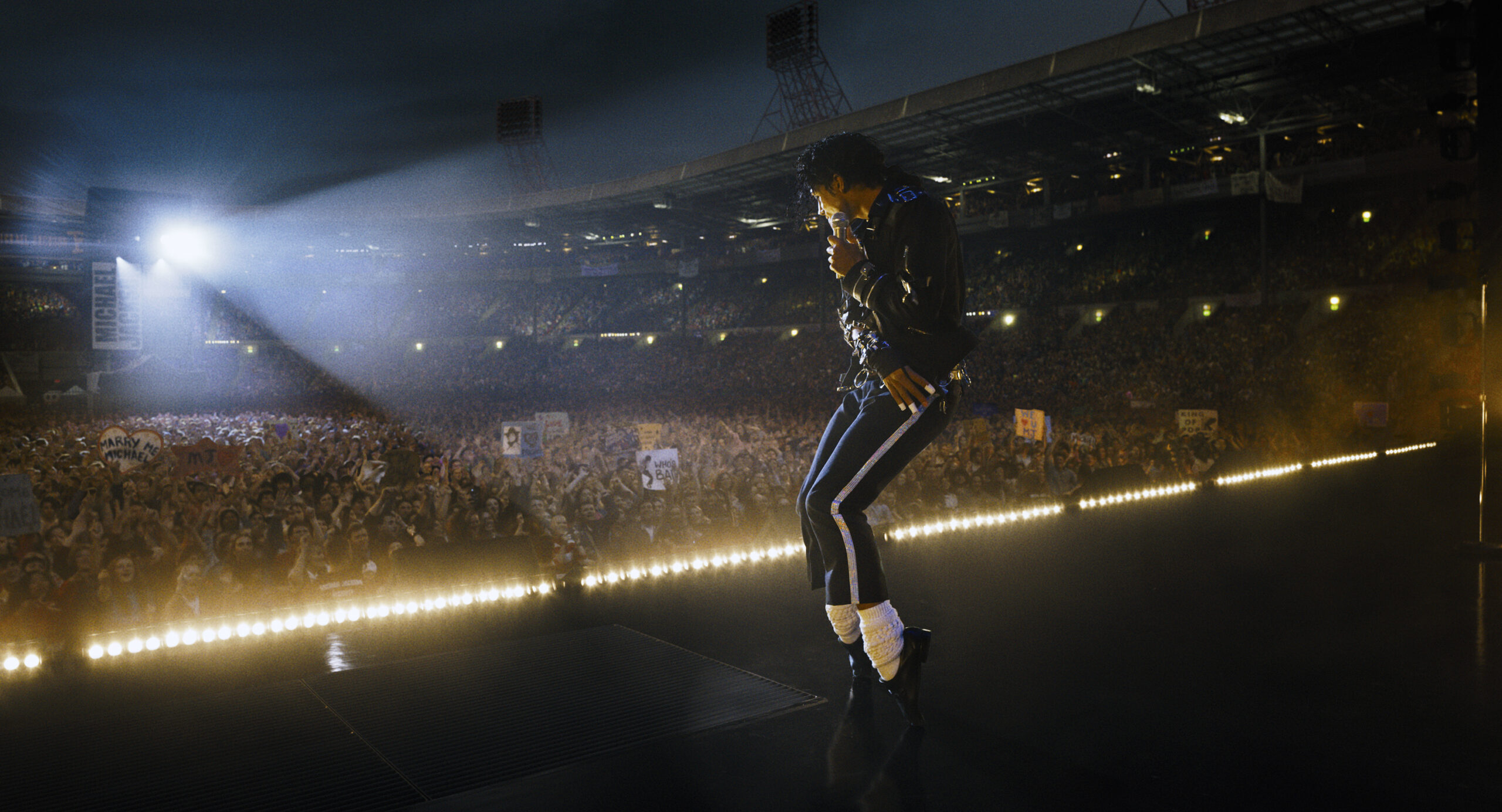
Jaafar Jackson not only delivered, but he also embodied his late, great uncle. I am convinced there was some kind of spiritual workings in the making of this film because in some scenes, it was hard to tell if he was acting or did Michael temporality have a possessing moment with his nephew, like Patrick Swaynze and Oprah Winfrey in Ghost.
Humanizing yet tragic
There were also some parts in the film that reminded us that Michael was really just a little kid when he got into the business.
Also, a tea moment, to actor Juliano Valdi, who played little Michael.
It is one part when his mother, played by Nia Long, suggested he play with kids his own age. But he responded saying he’s not like kids his age and the kids don’t treat him like a kid.
A gifted child, yes. A chosen one, absolutely. But still a child.
The most successful entertainer in the world and your best friend is a monkey and a rat. The most inspirational and talented person in the world and his insecurities rang louder in his ear than fans screaming his name.
It confirms something we’ve always known but rarely confront:
Greatness often comes at the cost of normalcy.
The film sheds light on a taboo topic that’s not discussed enough -if not at all in Black households- mental health and trauma.
The mental well-being of our children and how they feel about themselves starts at home, from the words you say and the actions you do towards.
A mother’s love
Let’s touch on mama Katherine Jackson for a moment.
The role she played in her son’s life should never be downplayed or overlooked. She represents the silent strength and resilience of Black women and in her own way, she was a mama lion to her cubs.
The only one in the pack that was able to tame the alpha who was Joe Jackson.
She represented the softness and reassurance he needed in his life. I admit at first I was skeptical about Nia taking on this role, but she delivered.
Katherine was- and still is- the emotional anchor and Nia brought that to the screen.
Respect on
Joe’s name
As for Mr. Joe Jackson, I came in ready to compare Colman Domingo’s portrayal to Lawrence Hilton-Jacobs’ in The Jacksons: An American Dream. The towel in the swimming pool scene? Timeless and I was prepared for Domingo to accept the challenge.
In his own way, Domingo gave more depth into the Jackson patriarch. He was stern, he was tough. His and Michael’s were a complicated relationship full of fear and resentment.
Most of us have one or two Joe Jacksons in our immediate family tree. But he was also a man shaped by his environment, fighting to create opportunities where there were none.
But let’s put some respect on his name. He fought hard for his family. He didn’t take no for an answer and in his own way he loved his family.
And later in life, Michael understood that. Through interviews and reflections, it’s clear there was an effort to reconcile—to find peace in the complexity of their relationship. And there’s something deeply comforting in knowing that, before either of them left this world, there was space for that understanding to exist.
Although the film does not quite reflect that reconciliation, it sets the foundation for it.
Taking back
the narrative
Before the movie could even have its official premiere, critics were already dismantling it online. It’s been labeled as bland, boring, and even “whitewashed”—which is confusing, considering this is a story about a Black man, produced and directed by Black creatives.
For decades, Michael Jackson’s legacy has been picked apart, reinterpreted, and at times, distorted. In recent years, since his passing, old allegations—including his name being loosely tied to the Jeffrey Epstein files—have resurfaced, despite being repeatedly clarified and found to be false.
And yet, those narratives continue to travel faster than the truth.
Let’s also not forget: by the time of his death, Michael owned the ATV Music Publishing catalog, which included the rights to The Beatles’ music, and was reportedly exploring major acquisitions—including Marvel Entertainment. Can you imagine a Black Panther era with the King of Pop behind the scenes?
In many ways, this film feels like the Jackson family reclaiming the pen.
Taj Jackson, the son of Tito and Delores Jackson, said it best when he addressed critics directly: on his X account: “Sorry media, u don’t get to control the narrative anymore of who Michael Jackson truly was.”
He added, “The public gets to watch this movie, they will decide for themselves. And you can’t handle that.”
Never forget
And the truth is mainstream society has always struggled to fully embrace powerful Black men in their entirety.
Michael Jackson was a Black man. The first Black artist to break barriers on MTV.
The most successful artist—period—with over 500 million records sold. The creator of Thriller, the best-selling album of all time.
A two-time Rock & Roll Hall of Fame inductee.
But beyond the accolades, beyond the records, beyond the spectacle, he was simply a great man. A purposeful man.
He was resilient in the face of pressure. Grounded in faith through chaos. And deeply compassionate, using his platform to give, to heal, and to inspire.
“It’s all for love…L.O.V.E.,” he once said.
And no matter how many narratives attempt to redefine him, one truth remains:
Michael Jackson’s true legacy will never be erased. As long as there are authentic people around to tell it.