What began as a celebration of Black music and cultural influence has evolved into a complicated conversation about accountability, redemption and the responsibility of Black elected officials.
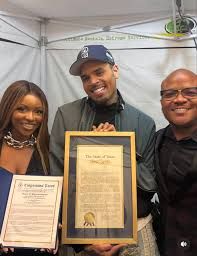
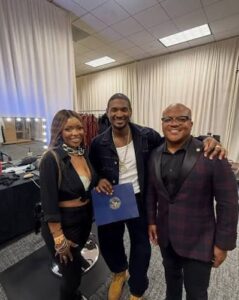
Chris Brown was recently honored during a sold-out concert in Arlington, Texas, where State Rep. Venton Jones joined U.S. Rep. Jasmine Crockett onstage during his Sept. 12th concert.
Jones presented Brown with a state proclamation recognizing his achievements in entertainment, while Crockett recognized Brown and Usher through the Congressional Record.
The moment was intended to celebrate what Crockett called “Black joy at the highest level.”
However, it also generated criticism from people who questioned whether Brown’s musical accomplishments should be formally honored without acknowledging his documented history of violence including his 2009 felony assault conviction involving his then-girlfriend Rihanna.
Jones later issued an apology directed particularly toward Black women and survivors of domestic and sexual violence.
“First and foremost, I want to acknowledge the women, the Black women, whom my actions have hurt,” Jones wrote on Instagram. He said public officials should be “just as loud” with their apologies as they were with the actions that caused harm.
Brown rejected the apology, telling Jones to “keep that award” and arguing that the lawmakers approached him with the recognition.
“Y’all came to me with this! Not the other way around,” Brown wrote, adding that his Dallas-area concerts were already sold out.
He accused Jones of retreating from the recognition because he feared losing political support and asked lawmakers to leave him alone so he could focus on the fans who continue to support him.
Brown also thanked Crockett for the congressional recognition and apologized for the criticism she received.
But beyond the public exchange between Brown and Jones lies a more difficult question: Can the culture celebrate an artist’s contributions while still holding that person accountable for the harm connected to their past?
The controversy has reignited a broader conversation about accountability, redemption and whether public officials should formally recognize entertainers with histories of violence. As of publication, Crockett had not publicly apologized for participating in the presentation.